.svg)

.webp)
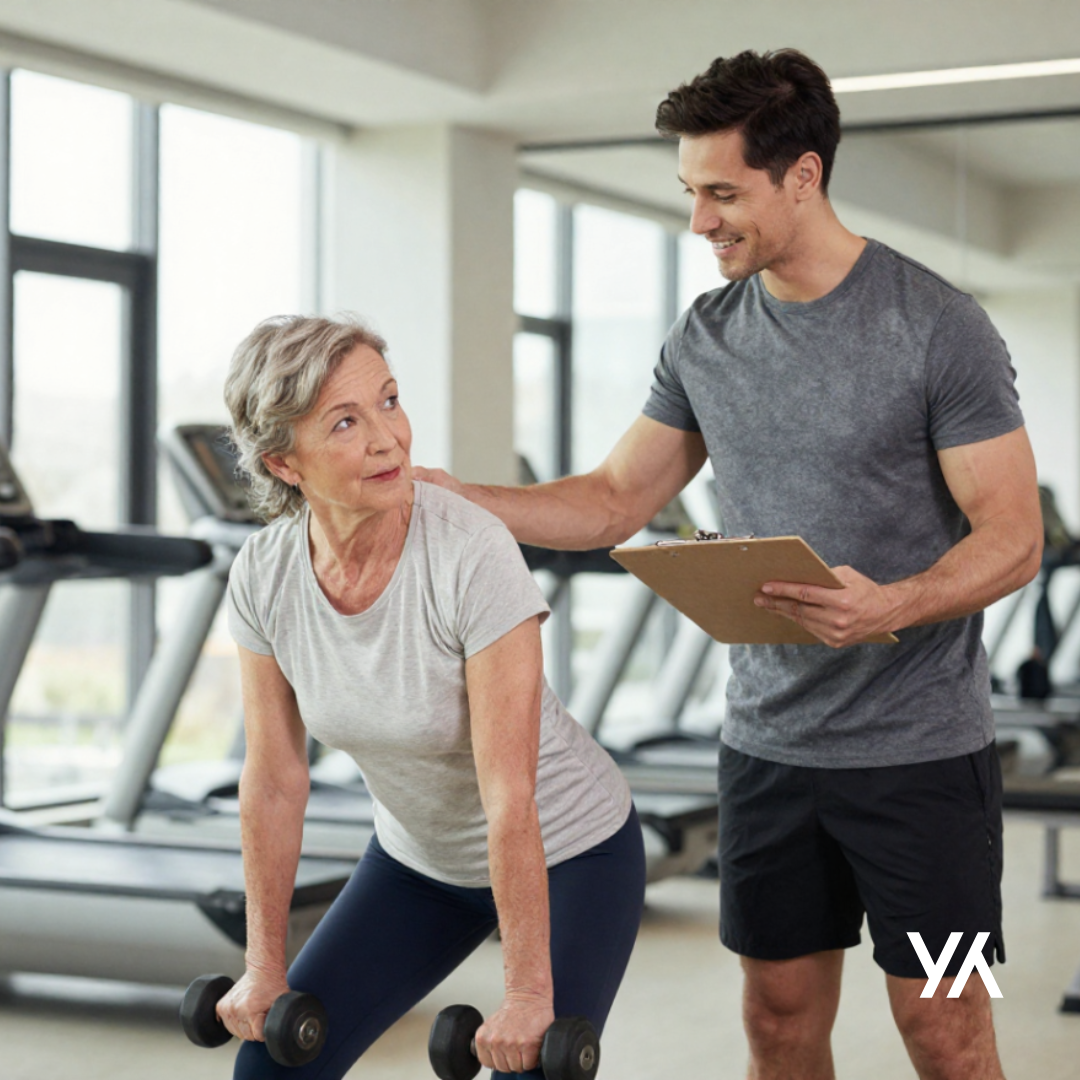
When turning 60, 70 or 80 you don’t necessarily need to give up on strength and resistance training, however, it does mean that it has to be smarter. Exercising can be one of the most powerful tools available for older adults to stay independent, avoid injury and protect your long-term health. But how should they train then? This is where a qualified, specialized personal trainer makes all the difference.

Aging Bodies Need a Different Approach
As we age, the body naturally loses muscle mass and strength - a process known as Sarcopenia.
This is a condition that creates a much higher risk of falls, fractures and loss of daily function due to a declining bone density, reduced joint flexibility and slower neuromuscular coordination.
Sarcopenia and its associated fall risk are considered a public health problem, since falling
is the third leading cause of chronic disability and are linked to reduce independence as well as higher morbidity and mortality
So, if you’re in your 60s and maintaining a routine built for a 30-year-old, let me tell you that it probably is doing you more harm than good.
Training for seniors needs to account for joint health, balance, medical history and realistic recovery times and a program that ignores these factors can be genuinely risky.
What Actually Works
Well, the good news is that research on this field is remarkably consistent and encouraging and it’s showing that a properly balanced training can actually reverse the effects of Sarcopenia.
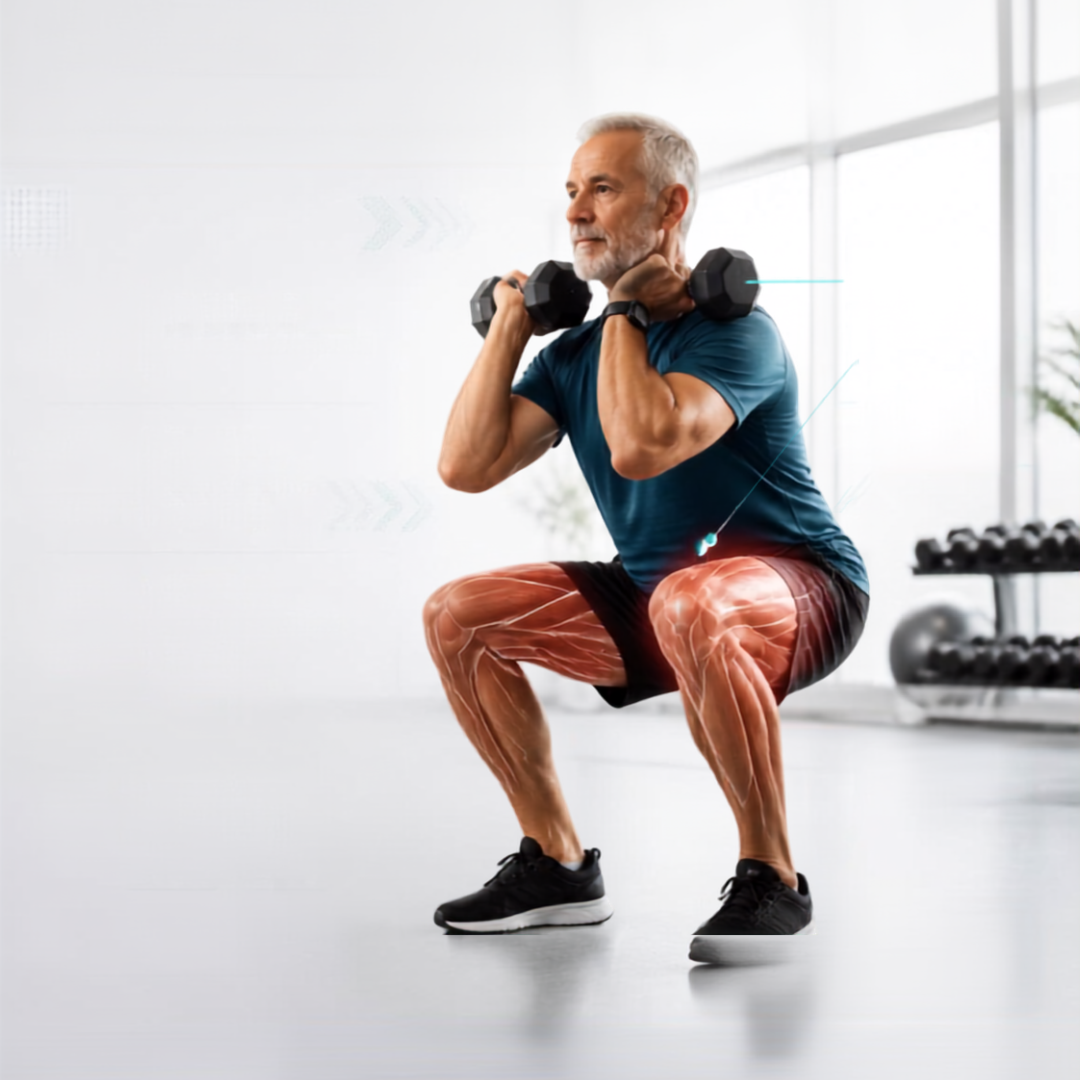
Progressive resistance training has been shown to improve physical capacity and muscle strength in older adults, promoting muscle hypertrophy that actually enhances joint support and enables effective corrective movements during physical activity.
In simple terms, lifting weights directly improves reflexes and stability.
Resistance training can also reduce your fall risk. Studies have shown that exercising is an essential component of any fall-prevention strategy, accompanied by balance and aerobic training. Researches have shown that combined strength, balance and aerobic-based training reduces fall rates by as much as 50% in older adults, with benefits that persist as long as training continues.
It has also shown significant improvements on maintaining normal blood glucose, lipids and cholesterol levels, supporting the management of chronic conditions that become common when we age
One specific detail is that trainers and exercise physiologists should provide efficient, ongoing feedback during exercise, with careful attention to posture and movement patterns - the benefit of exercise for seniors is inseparable from the quality of the supervision behind it
Specialized Guidance Changes the Equation
- Assess posture and movement patterns before programming anything - A postural and functional evaluation flags joint restrictions, imbalances, or compensations that would otherwise go unnoticed until they cause pain or injury.
- Adjust intensity and exercise selection in real time - A live, attentive coach can adapt on the spot rather than following a rigid, pre-written plan.
- Build consistency without overreaching - A sustainable, realistic plan matters more than an intense but short-lived one.
- Bridge fitness and daily life - Training is about being able to get up from a chair, carry groceries, or catch your balance on uneven ground. Functional goals that a generic program rarely addresses directly.
Papayya’s science-based methodology is particularly relevant to this conversation. Every session is conducted with a live personal training watching and adjusting your form in real time, which research has identified as an essential step for older adults to become part of a consistent, active lifestyle.
👉 Try Papayya's FREE 14-day trial right now!
.png)
Bottom Line
As we have been observing throughout this article, exercising is, in fact, one of the most effective tools to preserve independence, however, what we have identified here is that the way it is done also matters enormously. Proper supervision, real-time corrections and programs adapted to individual limitations are what separates genuinely protective training from a training that introduces new risks.
If you’re looking to start or restart your fitness routine, the safest and most effective path forward is one guided by a professional who understands these specific nuances.
References
- Papayya — Science-Based Personal Training Approach: papayya.com
- "Mechanism-Driven Strategies for Reducing Fall Risk in the Elderly: A Multidisciplinary Review of Exercise Interventions," MDPI Healthcare: mdpi.com/2227-9032/12/23/2394
- "Resistance Training for Older Adults: Position Statement," National Strength and Conditioning Association (NSCA): nsca.com
- "Effectiveness of Exercise Interventions on Fall Prevention in Ambulatory Community-Dwelling Older Adults: A Systematic Review with Narrative Synthesis," Frontiers in Public Health / PMC: pmc.ncbi.nlm.nih.gov/articles/PMC10435089
- "A Review on Aging, Sarcopenia, Falls, and Resistance Training in Community-Dwelling Older Adults," MDPI International Journal of Environmental Research and Public Health: mdpi.com/1660-4601/19/2/874
- "Benefits of Resistance Training in Older Adults," PubMed: pubmed.ncbi.nlm.nih.gov/33176670

 FACEBOOK


