.svg)

.png)
.webp)
Billions of cellular reactions take place inside your body every minute, in order to keep you moving, thinking, living. Over time, this intense metabolic activity creates waste: misfolded protein, worn-out mitochondria, etc. If left unchecked, this accumulation can contribute to premature aging, metabolic dysfunction and cellular fatigue.
Autophagy is your body’s recycling mechanism, designed to destroy, process and rebuild damaged cellular components. While diet is frequently highlighted to activate this process, physical activity is, actually, one of the most immediate and powerful triggers for cellular clean-up

Understanding Autophagy
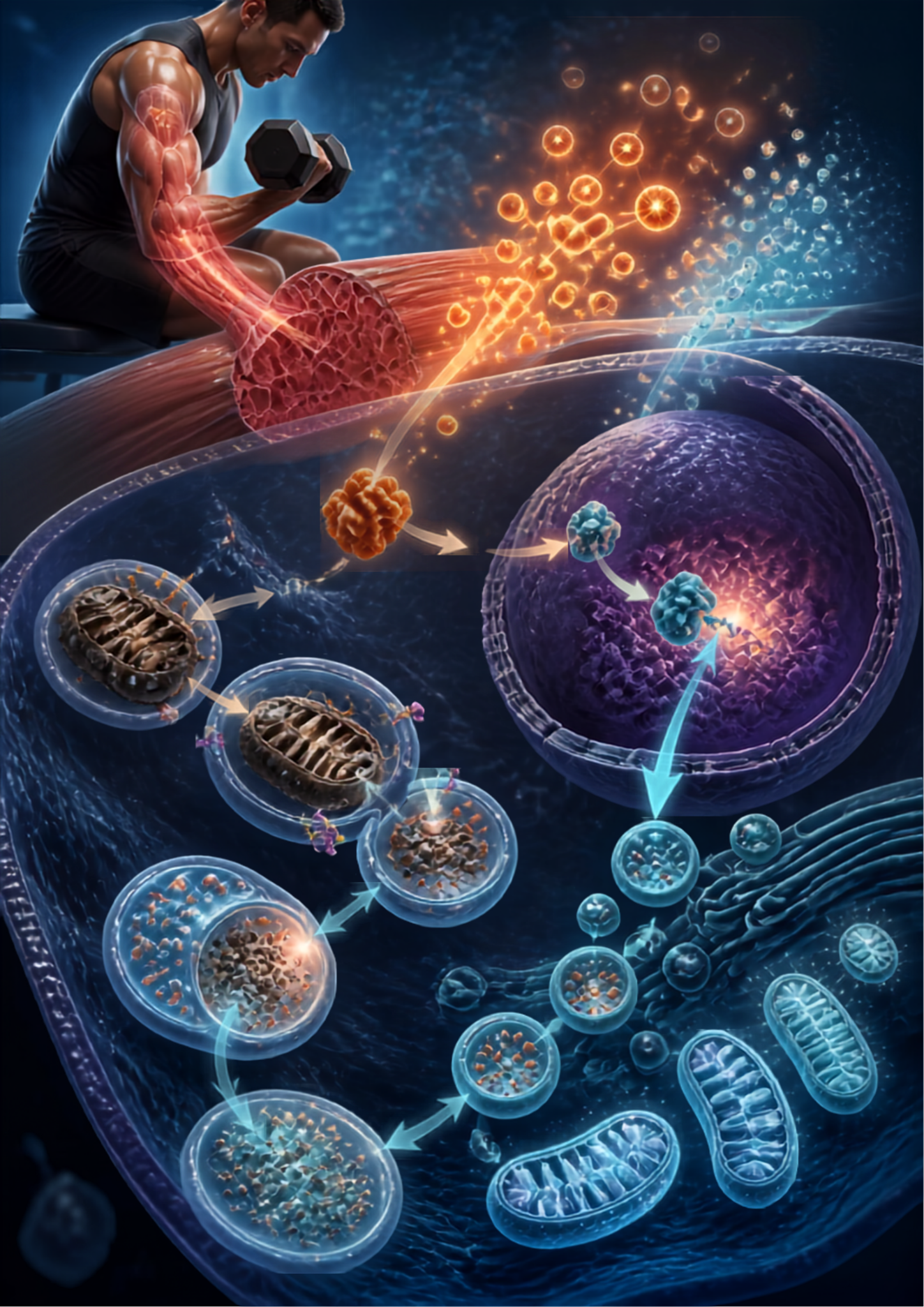
Autophagy functions almost like an automated sanitation crew. When triggered, a cell wraps damaged organelles and proteins inside a membrane structure called an autophagosome.
Rather than throwing these materials away, the cell reuses them to build fresh organelles, generate clean ATP energy and, consequently, repair vital structures. It helps maintain functional cellular machinery throughout your lifespan.
How Can Exercise Activate Cellular Cleaning
When working out, your muscle fibers undergo energetic stress. Cellular energy drops, causing intracellular levels of AMP to rise. This shift triggers a cascade of biochemical reactions that initiate cellular maintenance:
- AMP Activation: AMP functions as a cellular fuel gauge. When energy levels drop during movement, AMP turns on and signals the cell to clear out low-performing organelles and create a pathway that suppresses cellular cleaning.
- TFEB Translocation: Research published in Cell Metabolism demonstrates that physical exertion activates TFEB, which regulates lysosomal biogenesis. That turns on the genes responsible for expanding your cell’s waste-dismantling capacity
- Targeted Mitophagy: Mitochondrial sustain heavy oxidation when exerted. Exercising triggers mitophagy, clearing out the degrading powerhouses so brand new mitochondria can take their place.
Which Workouts Work Best?
- High-Intensity Interval Training (HIIT): Short bursts of maximal effort create rapid metabolic stress, which triggers AMP and turns the autophagy process much quicker than moderate activity
- Resistance Training: Lifting weights create micro-tears in your muscle proteins. That acts as a direct stimulus for targeted autophagic clearing, ensuring old fibers are recycled before new protein is synthesized.
- Aerobic Exercise: Extended cardio sessions stimulate continuous lysosomal action across both skeletal muscle and organ tissue, facilitating metabolic adaptations.
.png)
Find your Optimal Threshold
One thing that is important to clear out is that autophagy operates on a principle of adaptive stress. An insufficient effort fails to induce energetic depletion. On the other hand, excessive, unguided exertion leads to systemic overtraining, chronic inflammation and cellular breakdown.
Platforms like Papayya offer real-time monitorization and ensure you apply enough stress to trigger cellular renewal while keeping your movement safe, personalized and sustainable.
Sources
- Mansueto, G., et al. (2017). Transcription Factor EB Controls Metabolic Flexibility during Exercise. Cell Metabolism, 25(1), 182–196.
- Egan, B., & Zierath, J. R. (2016). SnapShot: Exercise Metabolism. Cell Metabolism, 24(2), 340–340.e1.
- He, C., et al. (2012). Exercise-induced BCL2-regulated autophagy is required for muscle glucose homeostasis. Nature / Autophagy (PMC), 8(10), 1151–1157.

 FACEBOOK


